
FRP/GRP/GFRP Grating Manufacturer
Composite Gratings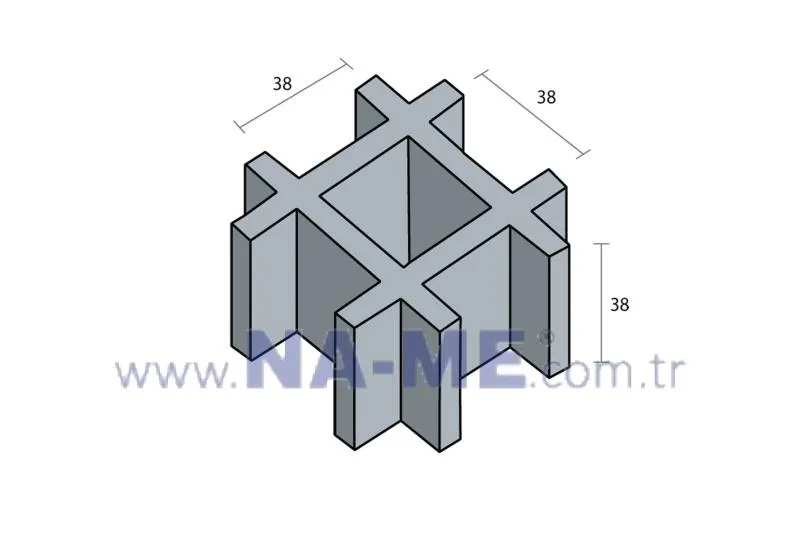

FRP Grating Product Groups
NA-ME manufactures composite gratings at its Başkent Industrial Zone plant in Ankara. Selection is based on mesh size, panel height, span, expected load, resin, surface and site conditions.

The information you share is processed to answer your request and prepare a quotation, in line with Turkish Law No. 6698 (KVKK) and the GDPR. Details: Privacy Notice
What Do FRP, GRP and GFRP Mean?
FRP, GRP and GFRP describe the same glass-fibre reinforced composite material family. For molded gratings, mesh, panel height, resin and surface are selected against span, expected load and site conditions.
Which Grating Group Should Be Evaluated?
This table narrows the initial product group. Final suitability must be verified against span, load and site conditions.
| Project requirement | Initial group | Available sizes | Check |
|---|---|---|---|
| Floor or platform requiring standard openings | Standard mesh | 38 × 38; h25, h30, h38 | Span, load, surface and resin |
| Surface requiring smaller openings | Mini/micro mesh | 19 × 19; h30, h38 | Span, load and surface |
| Project specifying rectangular openings | Rectangular mesh | 19 × 100 h25; 25 × 50 h38 | Bearing direction, span and load |
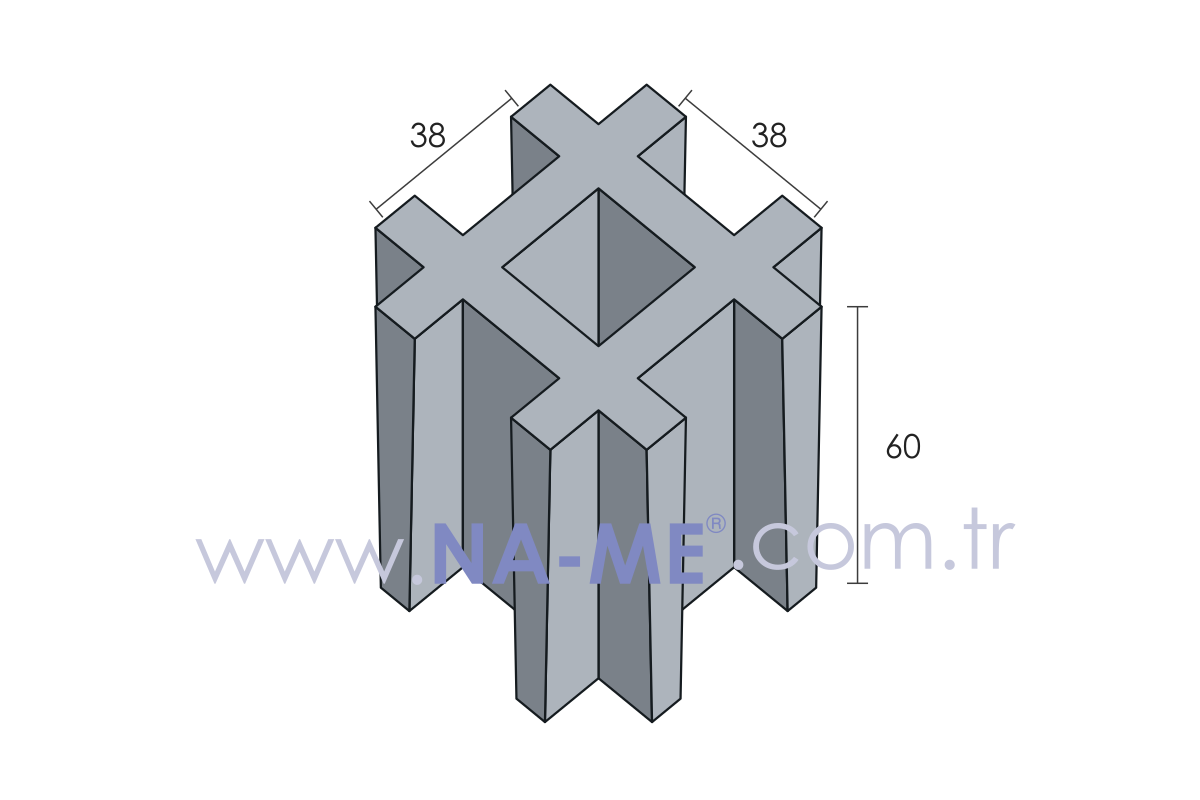
| Project requiring a higher panel section | Heavy-duty group | 38 × 38 h50/h60; 50 × 50 h50 | Span and project load |
Components
Glass fiber, resin, chemical additives and pigment are the main components of Composite, FRP gratings. By changing one or more of these components, material can be produced according to the ambient conditions.
- Resin
Resin used in casting type composite, FRP gratings gives the material high chemical resistance, flexibility and UV resistance properties. Different resin types are used in accordance with the ambient conditions where the material will be used. These resin types can be examined under 3 main headings; O-phthalic; i-phthalic for general use; in environments requiring chemical resistance, Vinyl Ester; used in environments requiring high chemical resistance.
- Glass Fiber
Composite, FRP gratings use multilayer and continuous glass fibers. With the glass fiber fibers used, the grids have high physical strength.
- Chemical Additives
In addition to the chemicals required for reaction, UV stabilizer, flame retardant and smoke density reducing additives are used in order to improve the physical and chemical properties of the cast type Composite (GRP) gratings.
- Pigment
Casting type Composite (FRP) gratings can be produced in desired colors by using pigments. In this way, it can be used easily in architectural projects where color factor is important.
Advantages:
- Lightweight : Composite, FRP gratings are lighter than metal alternatives, so no need for machinery during installation, labor and equipment costs are reduced.
- Corrosion Resistance: Composite, FRP gratings show anti-corrosive properties in environments requiring chemical resistance.
- High Impact Resistance: Composite, FRP gratings have high impact resistance thanks to the glass fiber they contain.
- Thermal Insulation: Composite, FRP gratings thermal permeability is very low.
- Insulation * : Composite, FRP gratings do not conduct electricity. They are used in environments requiring electrical isolation and where work safety is important. * Electrical conductivity can be gained by additional processes.
- Non-slip: Non-slip properties can be gained with the concave and sandy surface types. It is used where oily and wet floor applications and occupational safety are important.
- Flame Retardancy: Burning characteristics of grates can be changed by special type of resin and chemical additives.
- Low Maintenance Cost: Easily cleaned with pressurized water. Since the color is given in the production stage, there is no re-painting costs.
- Long Life: Composite, FRP gratings have a longer life compared to alternatives due to their chemical and physical properties.
- Color: Available in all primary colors selected from the RAL catalog. It is especially preferred where architectural applications and occupational safety are important.
Application Areas:
- Industrial plants
- Shipyards
- Treatment plants
- Electricity distribution and transformer buildings
- Petroleum platforms
- Food facilities
- Chemical industry
- Textile factories
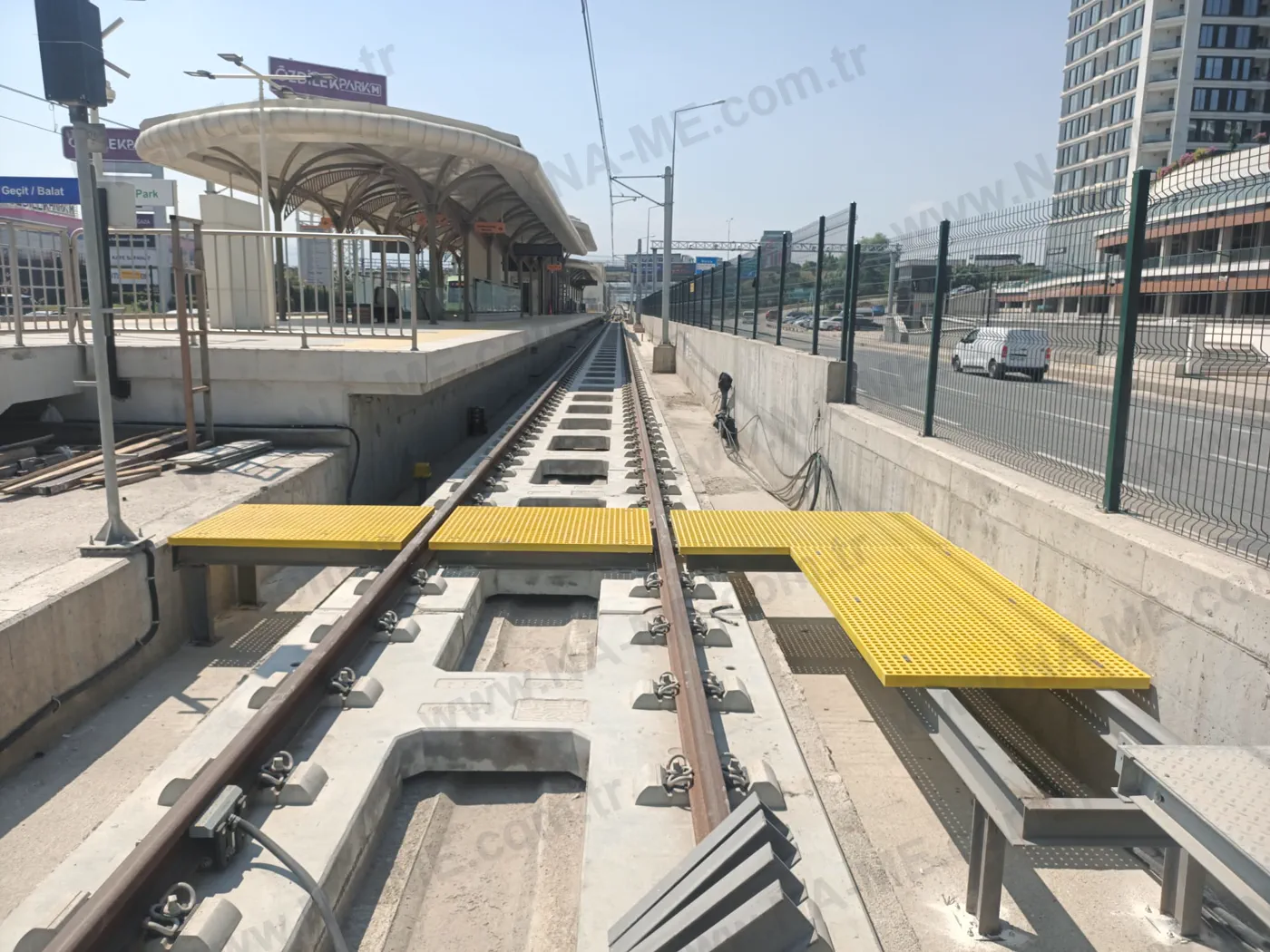
- It is used as platform grating, sheet, channel grating, cable channels, insulated carpet and closed grating (cover) in many fields such as military facilities.
What Determines FRP Grating Price?
- Mesh: 38×38, 19×19, 19×100 or 25×50 mm.
- Panel height: h25, h30, h38, h50 or h60.
- Resin: Orthophthalic, isophthalic or vinyl ester.
- Surface: Concave, flat, gritted or covered.
- Panel and cutting: Standard size, project cutting and offcuts.
- Quantity and delivery: Project area and shipping destination.
For a project quote, provide panel dimensions, span, expected load, site conditions, surface and resin requirements.
Compare Sizes and Mesh Options
Review standard 38×38 mesh, 19×19 mini mesh, rectangular and heavy-duty options by panel dimensions, open area and approximate weight.
Benefits of FRP Grating’s Application for Work Safety
FRP Grating provides for a steady and anti-skid surface that makes slipping almost an impossibility. Different types of FRP gratings are used depending on the type of functionality required. Molded FRP grating is the best and most reasonable for a anti-skid surface and high impact resistance. Also FRP grating provides for the lightest weight to the highest strength, but in the end, FRP grating is used to ensure workplace safety in high-risk areas.
What can be considered a high-risk area ?
A high-risk area is any area within the workplace that is prone to more hazards or accidents. These risks can vary from slipping and tripping to motor crashes. For slipping and tripping, these high-risk areas include stairs and steps, slippery surfaces, vehicles, and entrances.
According to the Centers for Disease Control and Prevention, 27% of nonfatal work injuries reported by 900,380 were tripping, slipping, and falling. In essence, any workplace needs to take measures and ensure that the employees are safe while working, especially in these high-risk areas.
Benefits of FRP Grating
FRP Gratings ensure a steady and sturdy surface that provides a much better grip and high durability. The price and type may vary according to the application. Ships and maritime use FRP grating for its longer life and lighter weight, whereas oil and gas industries make use of FRP grating as it better withstands heat.
Apart from providing a firm footing, FRP grating is also used in various high-risk areas for better traversal. Directions are often created for better movement. FRP grating is simply phenomenal to ensure a "No-slip policy" as the material works the same when wet as it would dry.
FRP gratings are a better alternative to steel as they provide the same strength when compared and are more "adjustable." Simply put, FRP gratings can be cut out as needed during work without finishing and would function the same way.
Also, FRP gratings are chemical resistant and are electrical insulators that allow better safety in a high-risk area than any metal surface. The work-life of an FRP grating is significantly longer when compared to steel grating if corrosion does not occur.
Furthermore, the application of FRP Grating is quite easy, and thus, installation is rarely a problem. As stated earlier, FRP Grating is quite durable, so the cost is incurred only once, while the benefits can be reaped for a longer period. This renders FRP Grating the first choice to ensure safety for employees in a High-Risk area.