
Real application photographs and project selection notes
FRP Grating Stair Tread and Step Applications
Slip-Resistant Stair Treads for Industrial Access
Key points for project evaluation
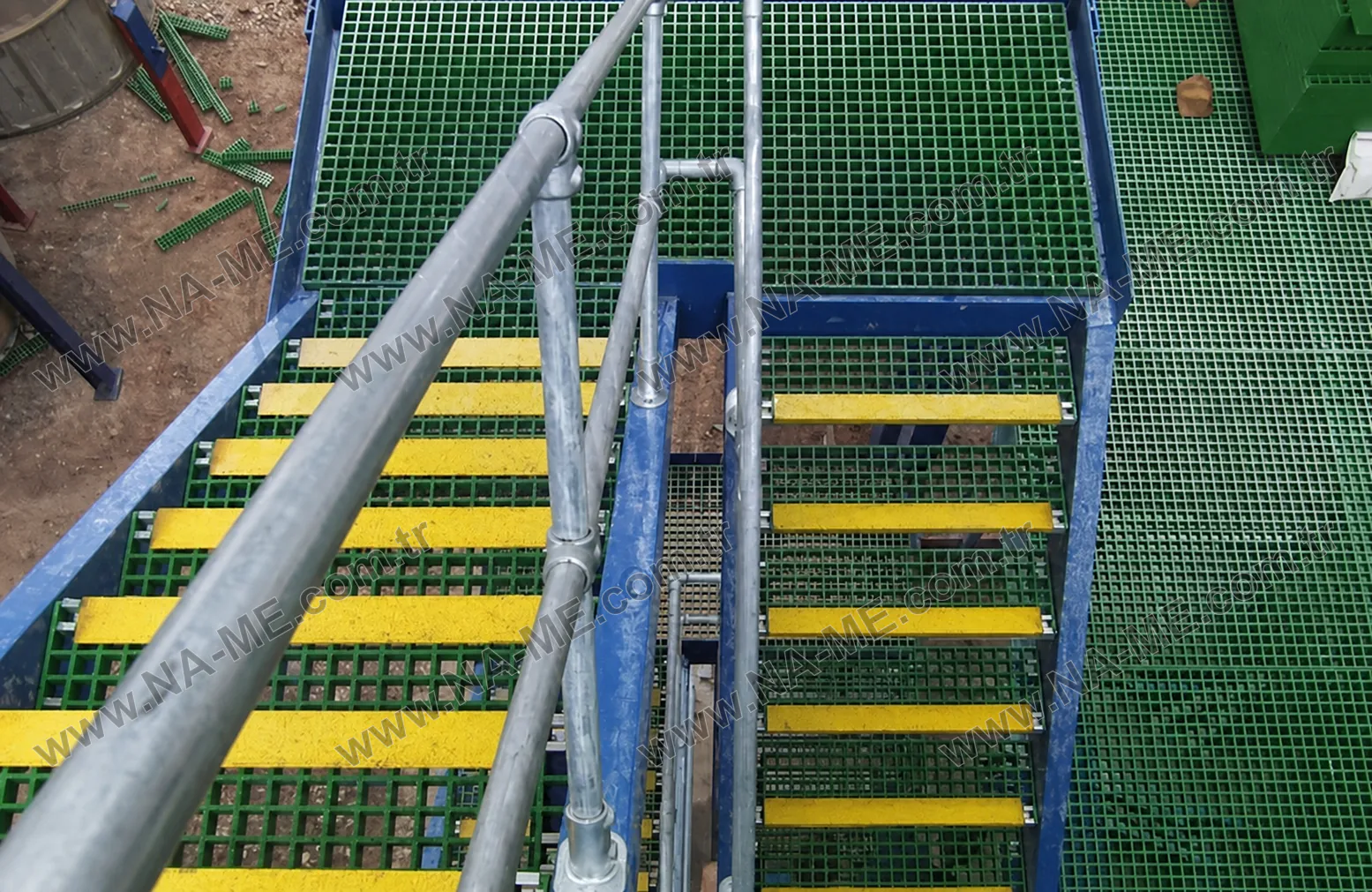
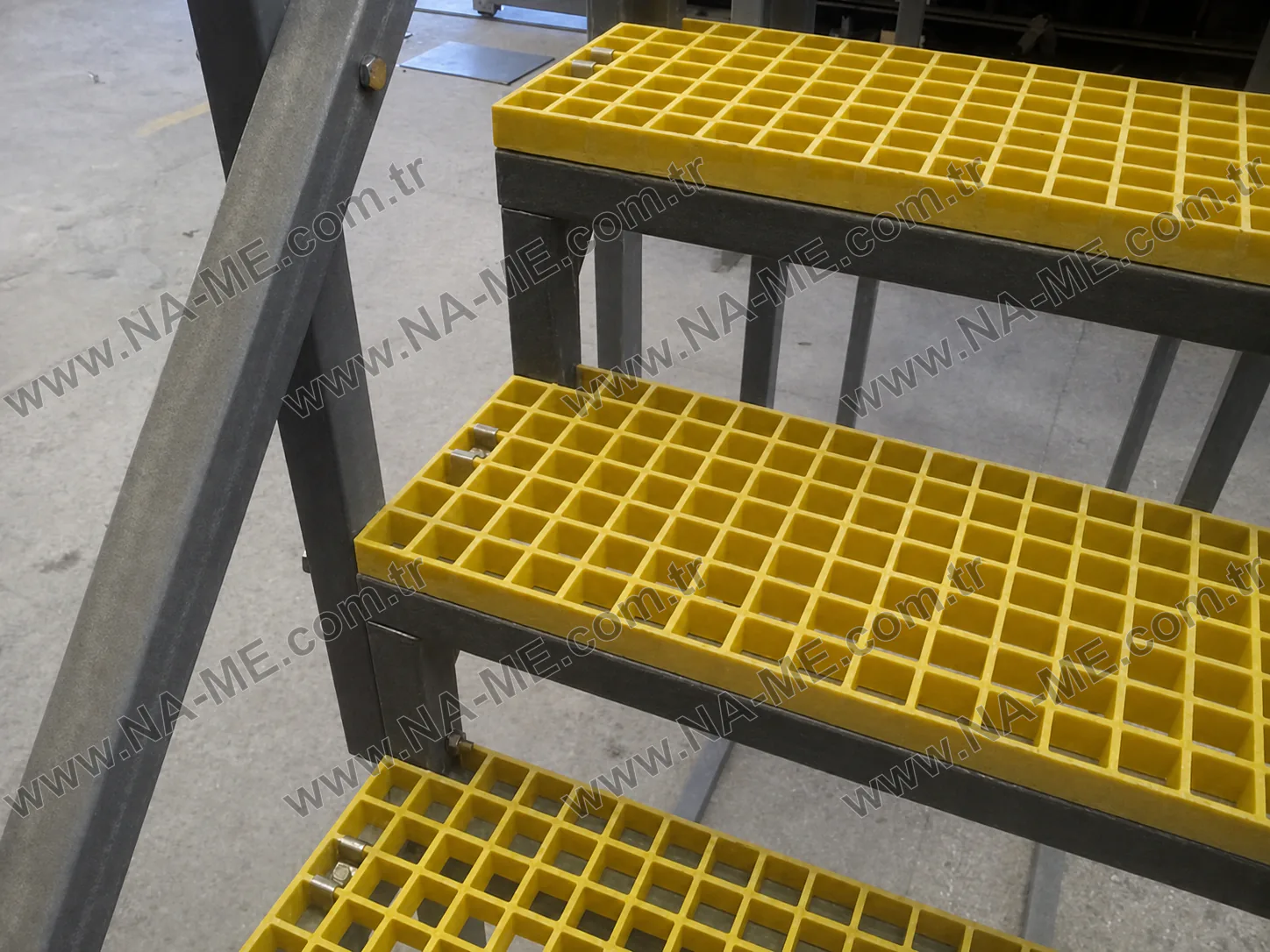
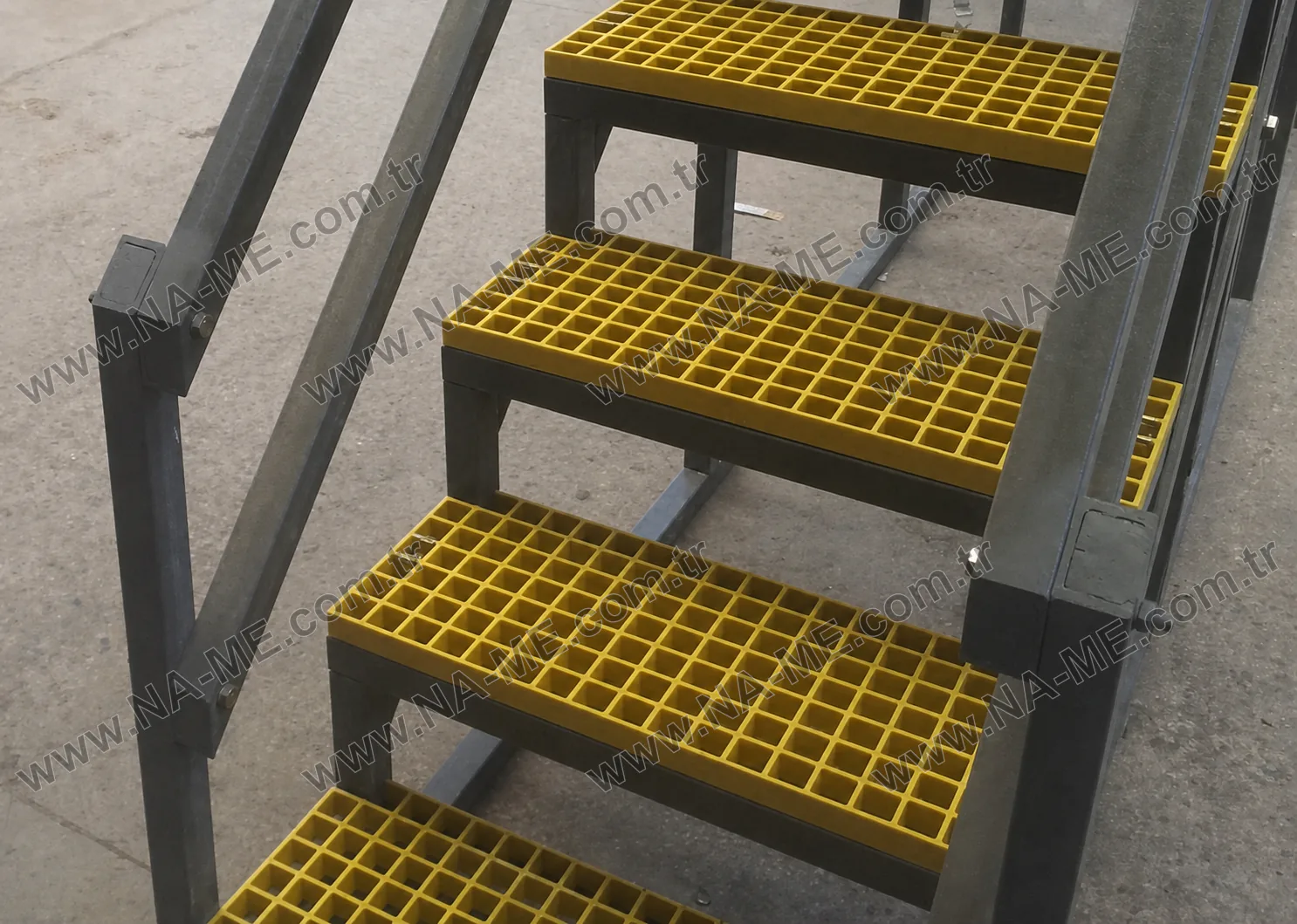
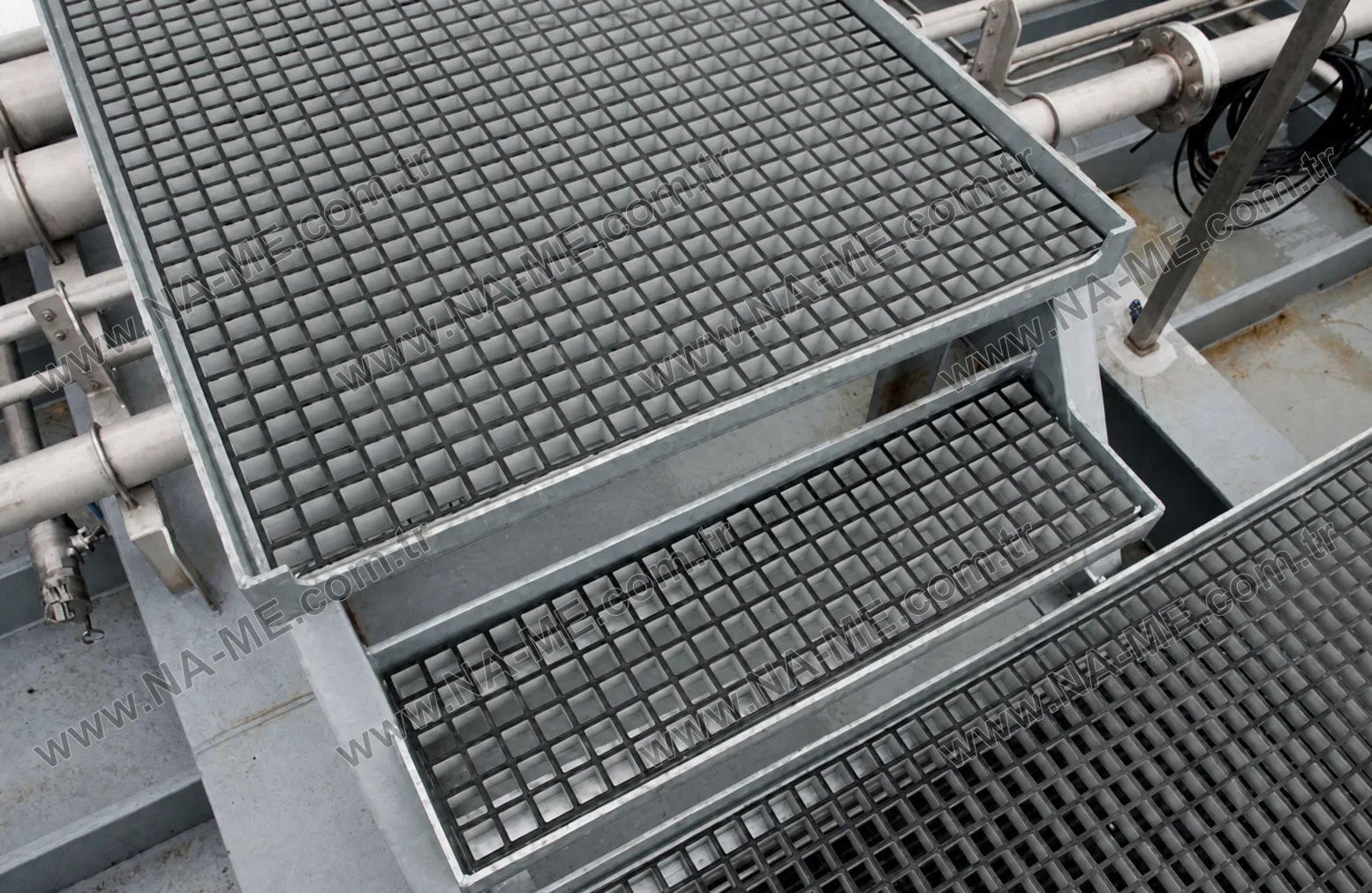
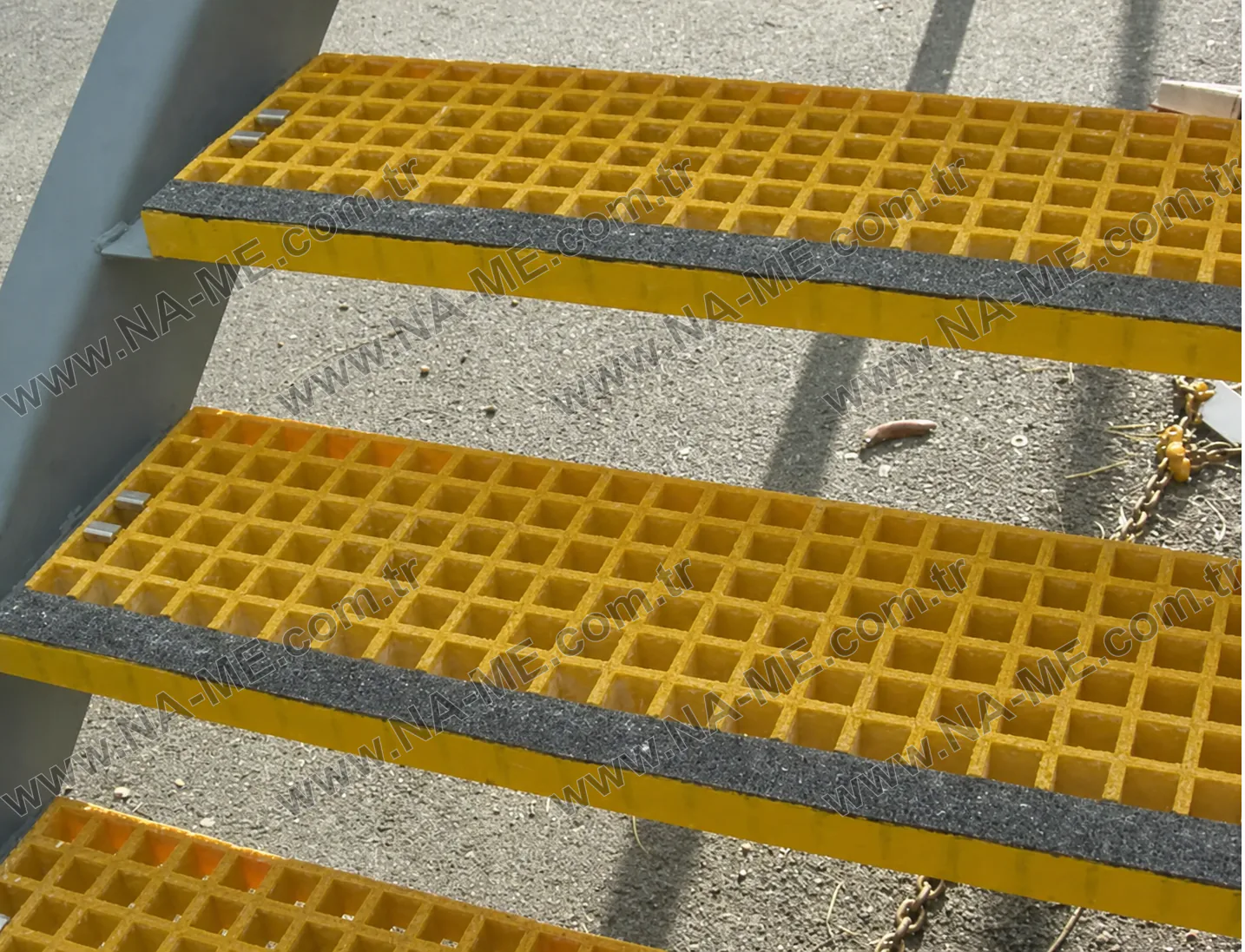
FRP grating stair treads are used at industrial plants, water-treatment and chemical facilities, marine structures and other access points exposed to corrosion. Concave or gritted surfaces help reduce slip risk in wet environments.
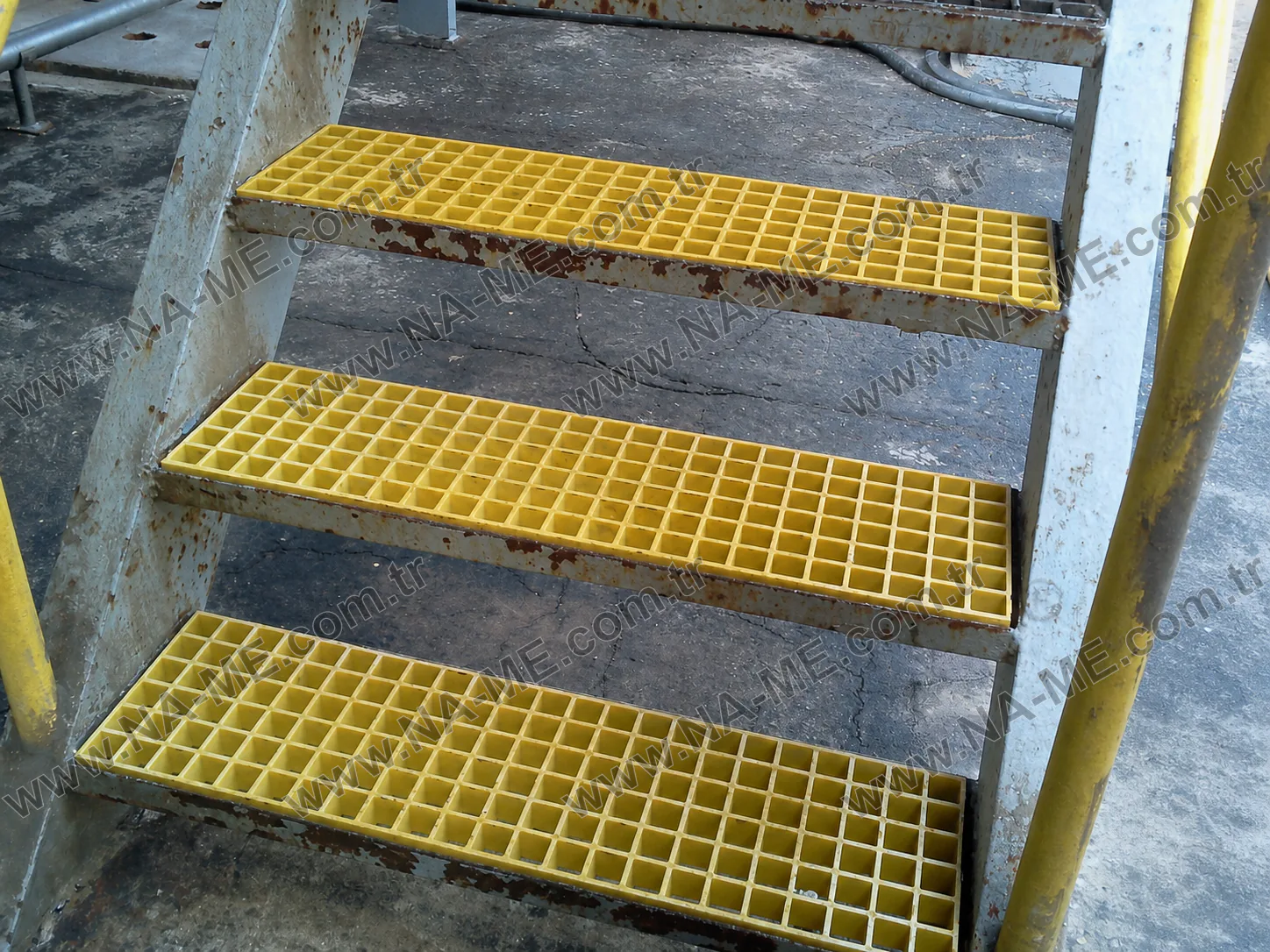
The photographs below show applications in different site conditions. Load, span, chemical exposure and installation details should be verified separately for each project.
Access Solutions for Different Site Conditions
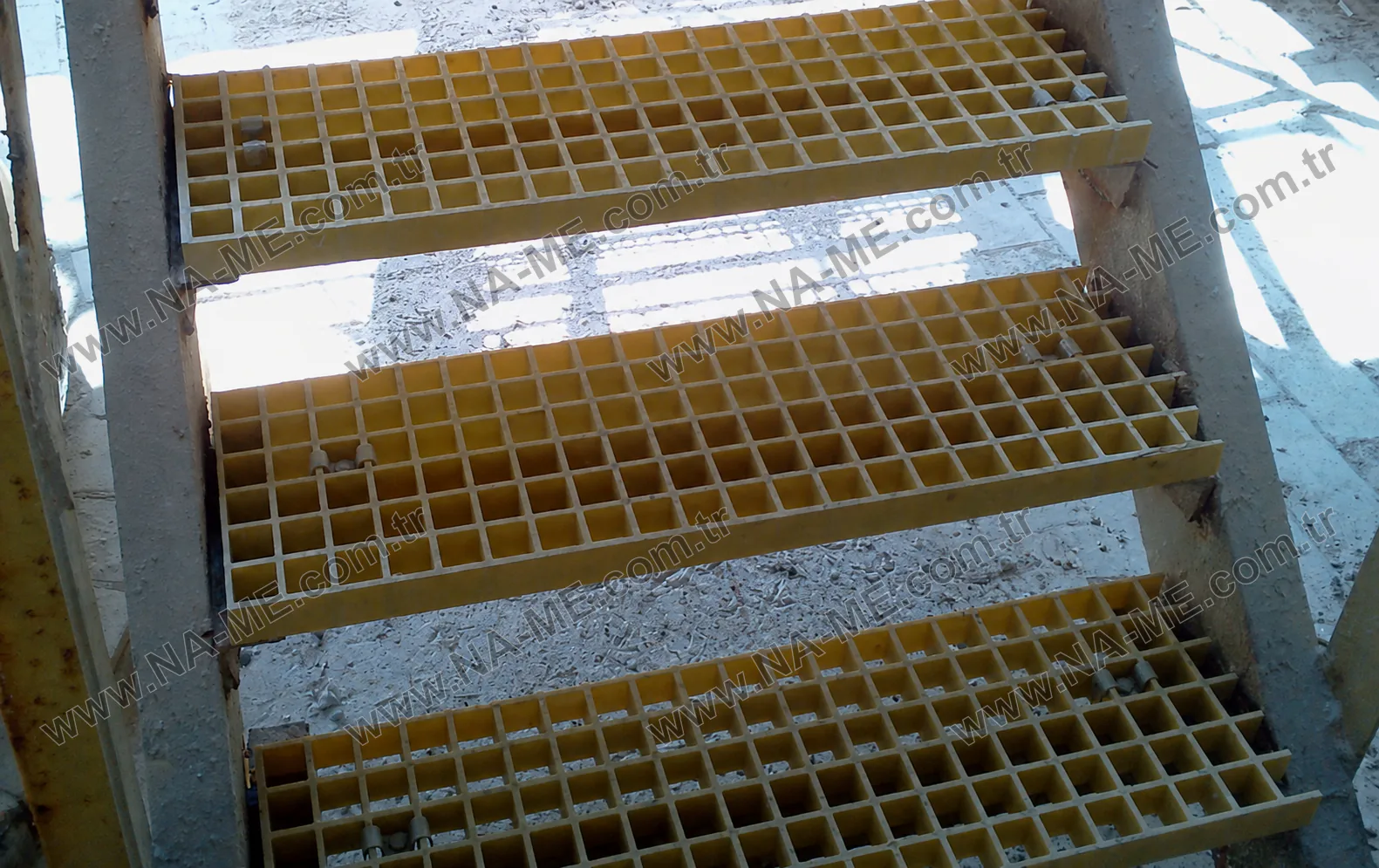
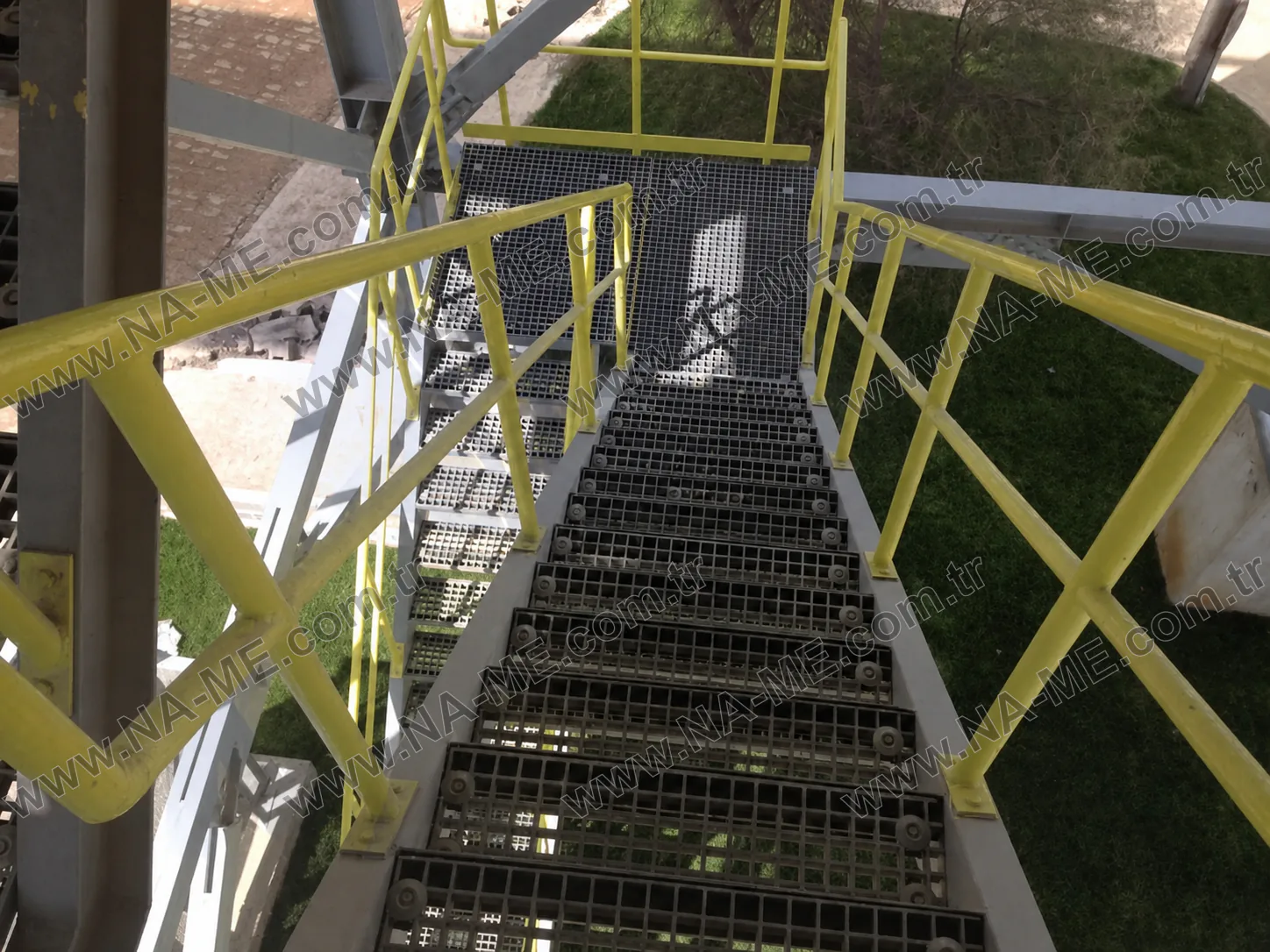
The open-mesh tread arrangement supports drainage on outdoor, process-area and industrial access stairs. Surface type, panel depth and supporting span are verified separately for each project.
How Is an FRP Stair Tread Selected?
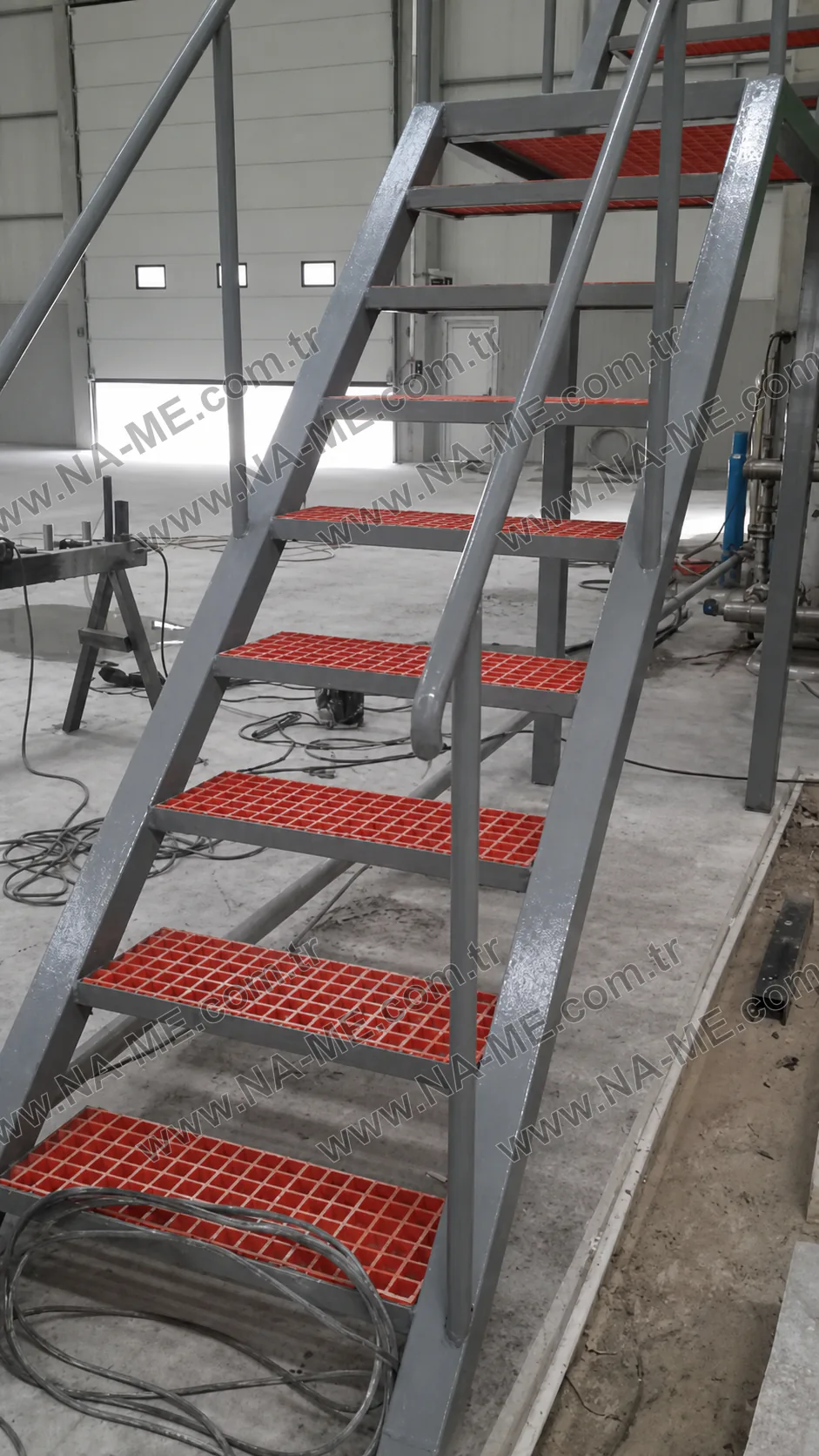
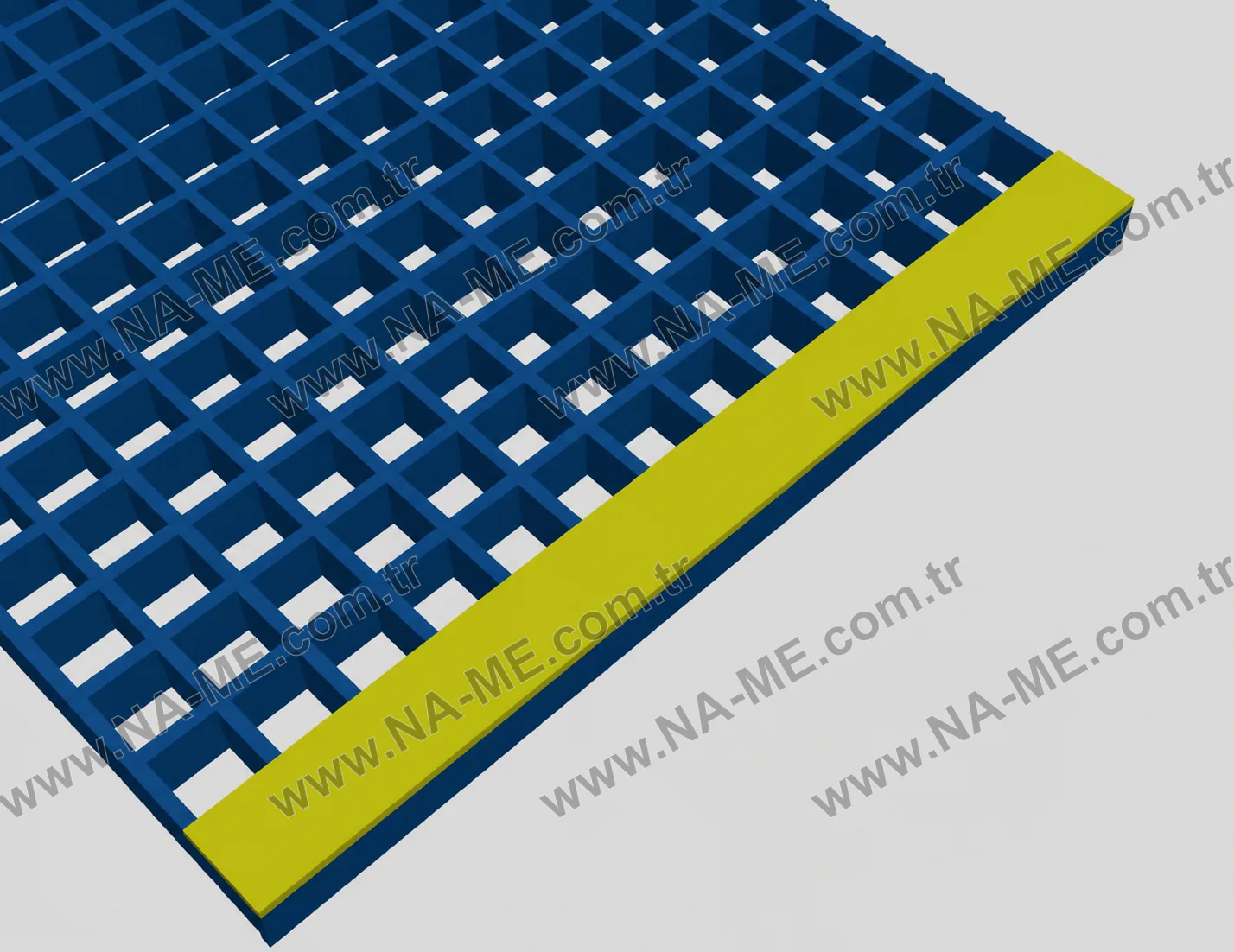
Panels can be cut to stair width, fitted with a contrasting nosing and secured to steel or composite supports with suitable fixings. Tread dimensions and load capacity should be verified for the project span and duty.
In industrial stairs, composite stair treads can replace steel or galvanized treads. Tread width, traffic frequency and wetness govern the selection. Where slip control is required, a gritted tread with a yellow front nosing is preferred; this supports both traction and clearer recognition of the step edge.
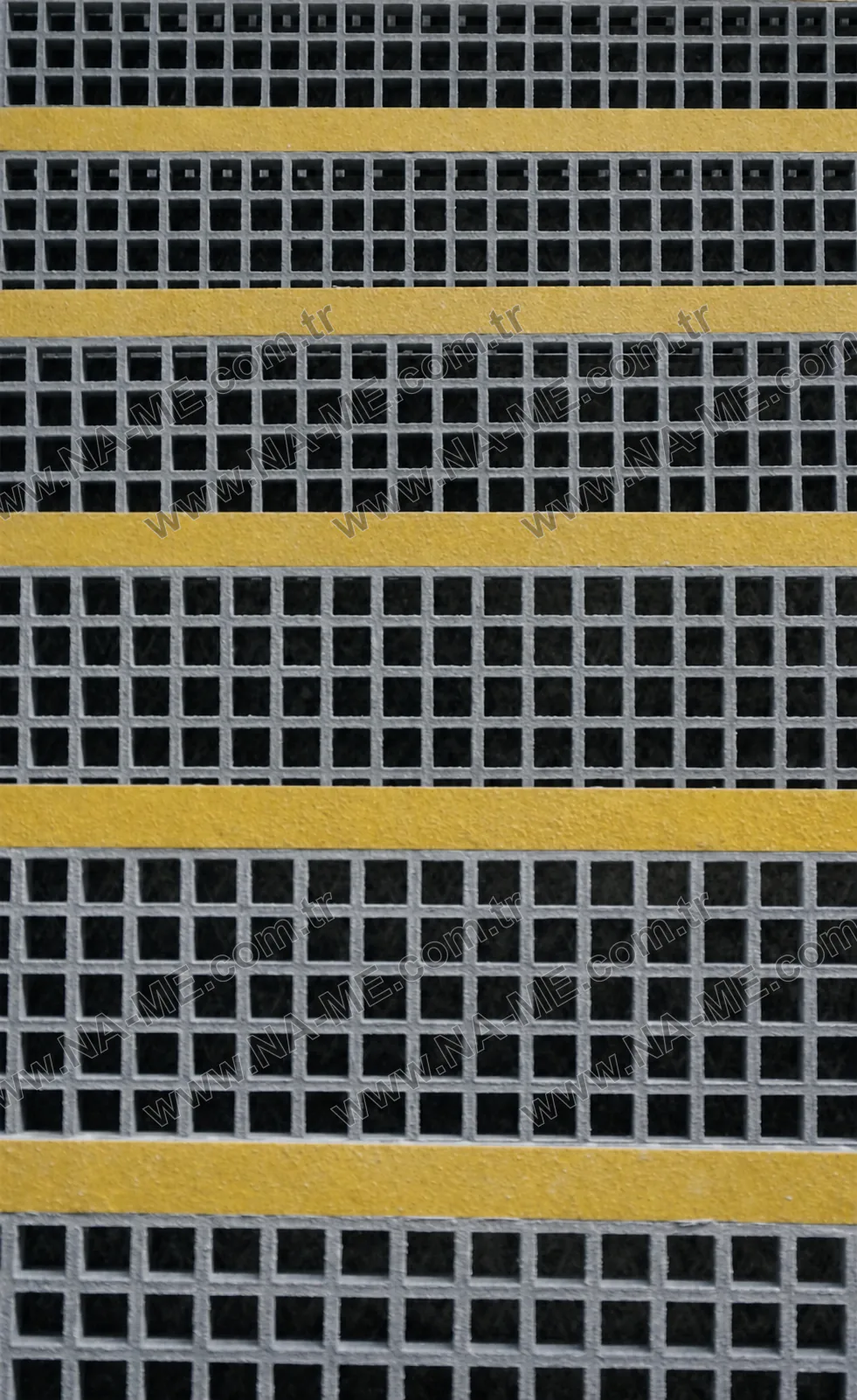
A contrasting yellow nosing helps users perceive the leading edge under varying light conditions. It is a visual aid and does not replace adequate lighting, a suitable guardrail, structural verification or safe-working procedures.
For profile-based solutions such as stair guardrails and fixed ladders, see our FRP profile applications page.
Tread Installation, Landing and Guardrail Details
Once the stair-tread selection is complete, the following site details become important. If they are overlooked, tread service life may be shortened, slip-control performance may deteriorate and additional site work may be required.
- Tread width and support. The tread is cut to the clear distance between the stair stringers; a central support is used on wider treads to control mid-span deflection.
- Front-edge nosing. The projecting nosing helps the foot engage the tread; if it wears, the affected tread or nosing component can be removed and renewed without replacing the whole stair.
- Slip-control surface. A gritted finish provides more aggressive traction, while a concave surface helps liquid drain rather than pool; both factors should be assessed in wet process areas.
NA-ME • SITE-READY DESIGN
Tread, support and fixing details are verified together
Surface choice alone is not enough. Span, support direction, resin system, fixing layout, landing and guardrail load path should be evaluated together against project data.
Landing Transition and Guardrail Load Path
Landing transition. A flat platform panel with the same surface type is normally used at the intermediate landing, maintaining traction and visual continuity from the treads to the landing.
Guardrail connection. Guardrail posts are fixed to the stair side stringer with a separate anchor plate, not to the tread panel, so guardrail loads are transferred directly to the supporting member.
Managing Slip Control and Low Upkeep Together
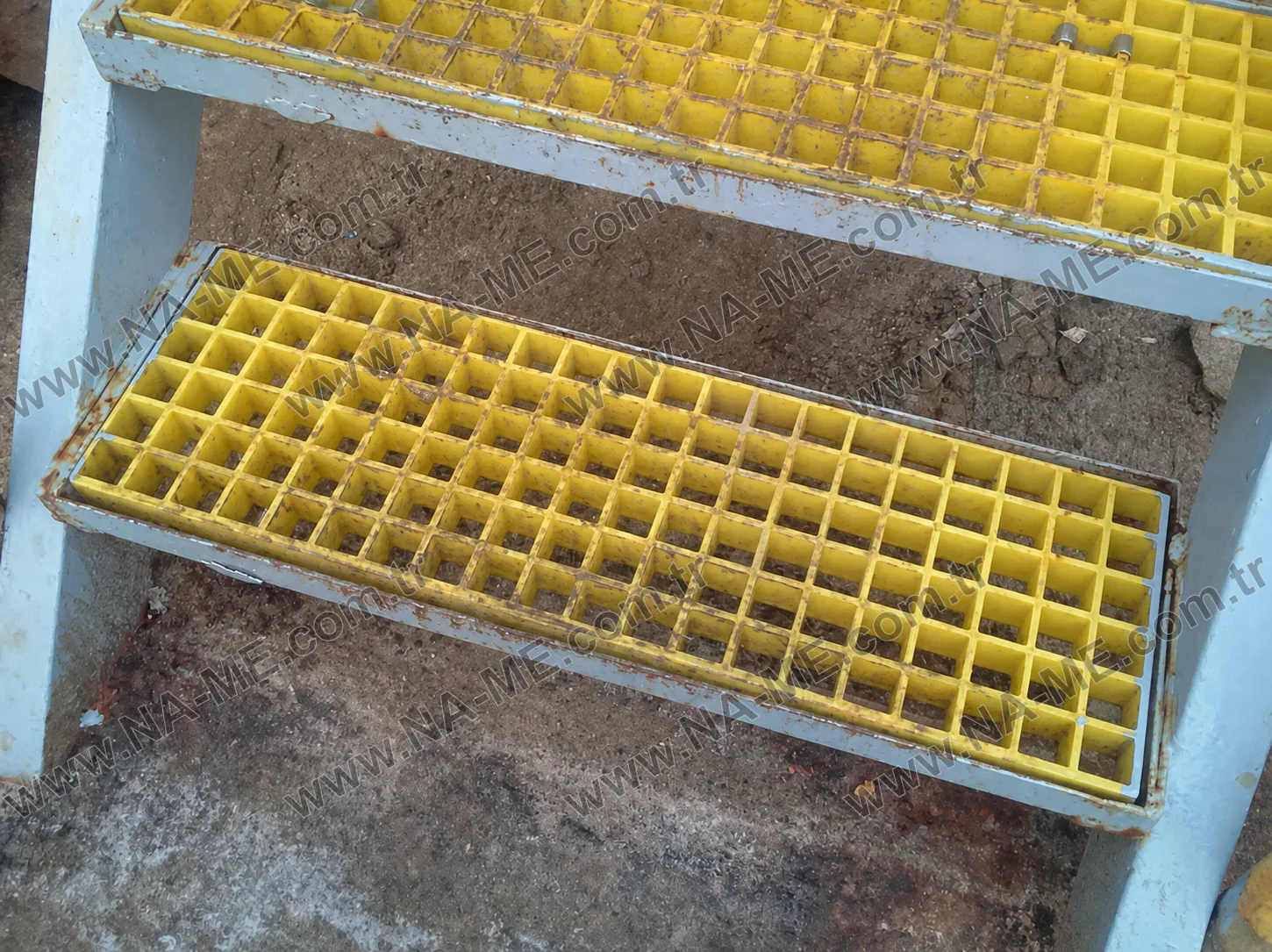
FRP grating treads do not rust like metal or rot like timber and therefore do not require recurring painting, galvanizing renewal or rust removal. Low upkeep does not mean no inspection: sand, oil and process residue should be cleaned routinely, while mechanical fixings, supports and tread nosings should be checked during planned site inspections.
Concave or gritted surfaces help reduce slip risk; contamination, slope, wear, footwear and cleaning condition still affect actual traction. Where steel sub-supports are used, their corrosion condition must be inspected separately.
For clips and pedestal options used in removable mechanical installations, see our fixings and pedestals page.
Individually Removable Treads
Removability. Because the treads are secured with mechanical fixings, they can be removed individually to provide access beneath the stair or to replace an affected tread without dismantling the complete flight.
Four Checks for a Project Decision
Surface
Assess concave or gritted finishes against wetness, oil, contamination and slope.
Support
Verify tread width, clear span and any required central support together.
Visibility
Coordinate contrast nosing with lighting and the access plan.
Inspection
Include routine cleaning and fixing, nosing and support checks in the maintenance plan.
Frequently Asked Questions
Must the entire stair be replaced if the tread nosing wears?
No. The nosing is installed as a separate profile, so the affected tread or nosing can be removed and renewed without replacing the complete stair.
Is the same panel used on the landing and the treads?
A flat platform panel is generally used on the landing. The same surface type is selected to maintain traction and visual continuity with the treads.
Is a guardrail post fixed directly to a tread?
No. The post is fixed to the stair side stringer so the guardrail load is not carried by the tread panel. The connection is detailed for the selected supporting profile during project design.
Are tread widths standard, or can they be cut to size?
Panels are cut to the clear width between your stair stringers. Non-standard dimensions can also be prepared after the project data are reviewed.
Discuss your project with our technical team
Share your project data to evaluate the panel, surface, resin and fixing details. Share the tread dimensions, stair inclination and traffic frequency so that the suitable tread arrangement can be reviewed.
Contact details →